
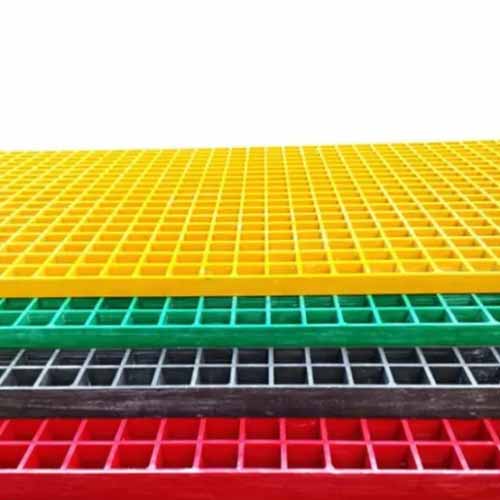
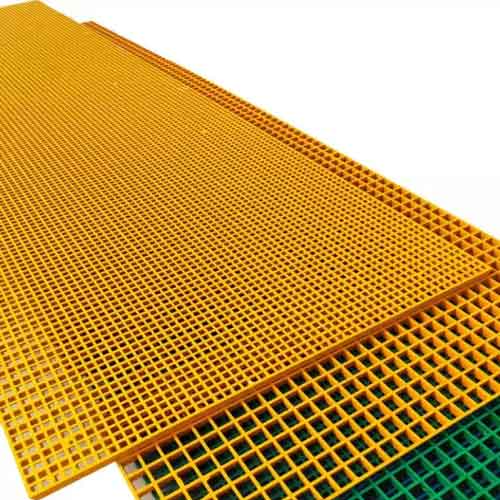
FRP platform grating redefines safety and efficiency in industrial walkways, combining lightweight design with exceptional corrosion resistance. Made from fiberglass-reinforced polymer (FRP)—woven fiberglass strands embedded in a thermoset resin (polyester or vinyl ester)—it weighs 75% less than steel but matches its load capacity (up to 3,000 lbs/sq ft). The open-grid structure allows airflow and drainage, preventing slips in wet conditions, while its non-conductive nature makes it ideal for electrical substations or chemical plants.
The advantages of FRP platform grating extend to harsh environments. Unlike steel, it resists rust, chemical splashes (acids, alkalis), and UV degradation, lasting 20–30 years with minimal maintenance. Textured surfaces (sandblasted or gritted) enhance traction, and custom colors (yellow for caution, green for safety) improve visibility. In wastewater treatment plants, it withstands hydrogen sulfide exposure; in offshore platforms, it endures saltwater spray. Modular panels (4x8 feet) simplify installation, reducing labor costs by 50% compared to steel.
Applications of FRP platform grating span industries. Oil refineries use it for catwalks over processing units; food factories install it in sterile areas (non-porous, easy to clean). For pedestrian bridges, its light weight reduces foundation loads. Maintenance involves periodic pressure washing to remove debris, with damaged panels replaced individually. By merging strength with resilience, FRP grating elevates workplace safety and longevity.
-
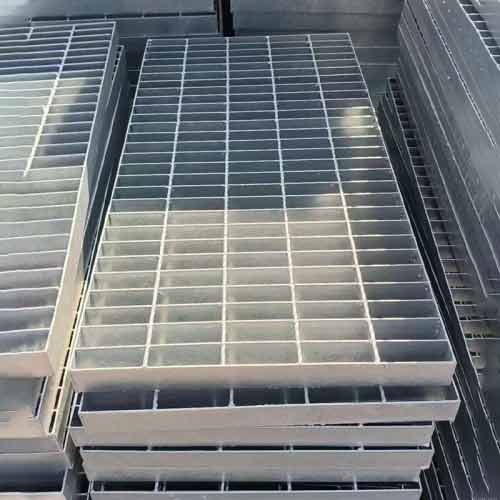
2026-03-13When engineers design access platforms around cylindrical structures—such as silos, reactors, or storage tanks—the circular platform grating becomes an indispensable solution for safe, ergonomic, and code-compliant walkways. Unlike flat panels that leave awkward gaps, custom-fabricated c
-
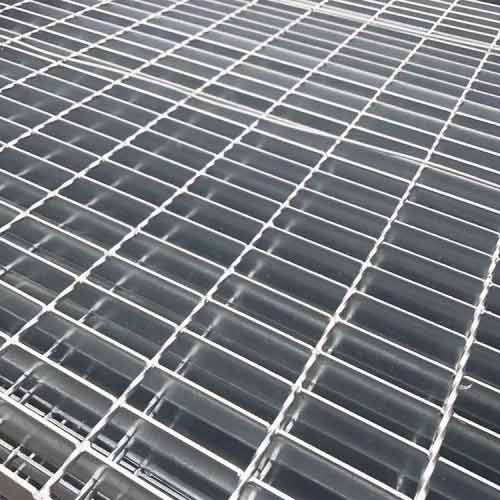
2026-03-12Cast iron grating has served as the foundation of drainage systems for centuries, providing the robust, reliable surface drainage that handles pedestrian and vehicular traffic in urban environments worldwide. These cast metal components feature perforated or slotted patterns that allow wat
-
2026-03-11Industrial HVAC systems require stable and safe maintenance access platforms to support personnel and equipment. Chiller platform grating serves as the critical flooring surface for these elevated structures, providing a non-slip and durable working environment. Chillers are typically heav