
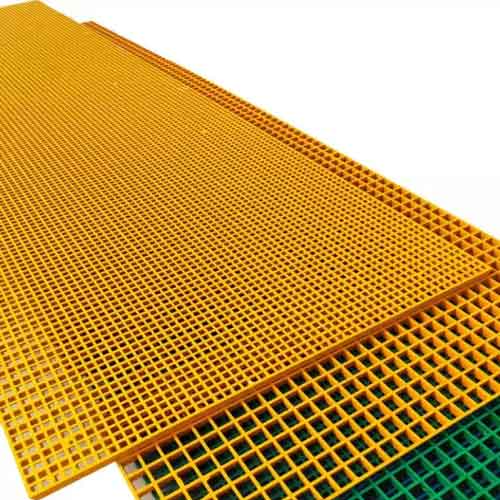
Fiberglass grating has gained widespread adoption across industries due to its compelling cost-effectiveness, combining low initial investment with minimal long-term maintenance expenses and extended service life. Compared to traditional materials like steel or aluminum, fiberglass offers superior corrosion resistance without requiring protective coatings, eliminating recurring costs associated with painting, galvanizing, or reconditioning. Its lightweight nature reduces shipping and installation labor costs, while its high strength-to-weight ratio allows for smaller support structures, further lowering capital expenditures in construction projects.
Operational savings stem from reduced downtime and maintenance frequency. Fiberglass grating does not rust, warp, or degrade when exposed to chemicals, saltwater, or UV radiation, making it ideal for coastal, chemical processing, or wastewater treatment facilities where metal alternatives require constant monitoring and repair. Cleaning is simplified—high-pressure washing or simple hosing suffices without risk of surface damage or chemical reaction. In food and beverage plants, non-conductive and non-sparking properties enhance safety, reducing insurance premiums and liability risks associated with electrical hazards or ignition sources.
Lifecycle cost analysis consistently favors fiberglass over metallic options. While upfront material costs may be slightly higher than basic carbon steel, the total cost of ownership over 20–30 years is significantly lower due to negligible maintenance, no corrosion-related replacements, and longer intervals between inspections. For example, replacing corroded steel grating every 5–7 years versus fiberglass lasting 25+ years results in substantial cumulative savings. Additionally, fiberglass’s insulating properties reduce thermal bridging in cold storage or heated environments, indirectly lowering energy bills.
Emerging innovations continue to improve cost-efficiency. Advances in resin formulations and pultrusion technology enable thinner, stronger profiles that use less material without compromising load capacity. Modular designs with snap-fit connections simplify field assembly, reducing labor hours and specialized tooling needs. Recycling initiatives are gaining traction, with some manufacturers offering take-back programs to reclaim end-of-life grating for reprocessing into new products. As sustainability metrics influence procurement decisions, fiberglass grating’s low environmental impact and recyclability further bolster its economic appeal, positioning it as a smart, future-proof investment for infrastructure managers.
-
2026-03-13When engineers design access platforms around cylindrical structures—such as silos, reactors, or storage tanks—the circular platform grating becomes an indispensable solution for safe, ergonomic, and code-compliant walkways. Unlike flat panels that leave awkward gaps, custom-fabricated c
-
2026-03-12Cast iron grating has served as the foundation of drainage systems for centuries, providing the robust, reliable surface drainage that handles pedestrian and vehicular traffic in urban environments worldwide. These cast metal components feature perforated or slotted patterns that allow wat
-
2026-03-11Industrial HVAC systems require stable and safe maintenance access platforms to support personnel and equipment. Chiller platform grating serves as the critical flooring surface for these elevated structures, providing a non-slip and durable working environment. Chillers are typically heav