
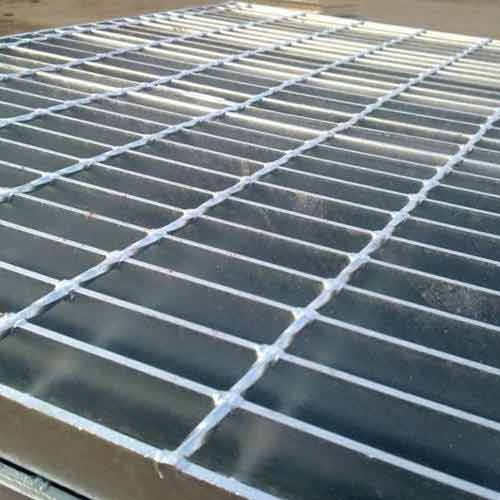
Perforated platform grating is widely used in industrial mezzanines, walkways, and drainage pits, where optimizing water flow while supporting loads is essential. Drainage efficiency hinges on the pattern, size, and distribution of perforations relative to the platform’s slope and surface tension of the liquid. Engineers begin by analyzing expected flow rates and viscosity characteristics, since high-viscosity fluids require larger orifices and steeper inclines to move effectively. Computational fluid dynamics (CFD) simulations can model flow paths to identify bottlenecks and stagnant zones, informing perforation layout adjustments.
Perforation geometry plays a pivotal role. Circular holes provide uniform flow but may leave unsupported spans vulnerable to stress concentration. Slotted perforations channel water directionally, aiding in controlled runoff, yet must be spaced to prevent debris blockage. Elliptical or custom polygonal holes can balance hydraulic efficiency with structural robustness, reducing clogging while maintaining load capacity. The open area percentage—the ratio of total hole area to total surface—must be high enough for rapid drainage but low enough to preserve strength; typical values range from 20% to 40% depending on load class.
Surface slope and positioning augment perforation effectiveness. Even a slight incline (1–3%) guides water toward outlets, preventing pooling. In multi-level platforms, aligning perforations with collection troughs optimizes capture. Edge detailing, such as drip lips or raised borders, confines spillage and directs it into designated drains, reducing slip hazards. Material choice (e.g., stainless steel for corrosion resistance, galvanized steel for economy) also affects long-term drainage performance by resisting fouling and corrosion that can narrow effective orifice size over time.
Maintenance accessibility ensures sustained efficiency. Designs incorporating removable sections or access hatches simplify cleaning of accumulated sediments and debris. Coatings that repel organic buildup further reduce maintenance frequency. By integrating hydraulic analysis, optimized perforation geometry, proper sloping, and easy maintenance, perforated platform gratings achieve high drainage efficiency without compromising structural safety.
-
2026-03-13When engineers design access platforms around cylindrical structures—such as silos, reactors, or storage tanks—the circular platform grating becomes an indispensable solution for safe, ergonomic, and code-compliant walkways. Unlike flat panels that leave awkward gaps, custom-fabricated c
-
2026-03-12Cast iron grating has served as the foundation of drainage systems for centuries, providing the robust, reliable surface drainage that handles pedestrian and vehicular traffic in urban environments worldwide. These cast metal components feature perforated or slotted patterns that allow wat
-
2026-03-11Industrial HVAC systems require stable and safe maintenance access platforms to support personnel and equipment. Chiller platform grating serves as the critical flooring surface for these elevated structures, providing a non-slip and durable working environment. Chillers are typically heav