
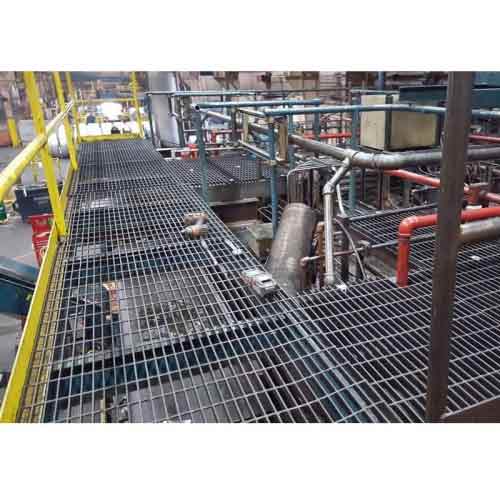
Industrial platforms are often exposed to harsh environments—chemical spills, saltwater, or high humidity. The material of the grating determines not just the initial cost, but the lifespan of the entire structure.
Carbon Steel (The Standard)
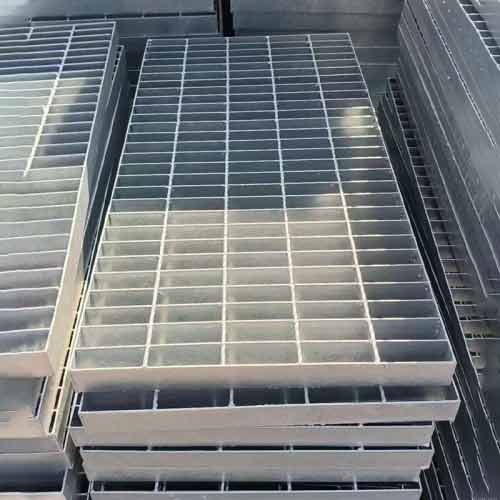
Mild steel is strong and cheap, but it rusts instantly when exposed to oxygen. It must be hot-dip galvanized. The zinc coating acts as a physical barrier and a sacrificial anode. However, in acidic environments (pH < 5), the zinc reacts rapidly, depleting the coating in months.
Aluminum Alloys
Aluminum forms a passive oxide layer that self-heals if scratched. It is ideal for marine environments or food processing plants where rust contamination is unacceptable. However, aluminum is softer than steel and can deform under heavy point loads (like forklift wheels).
Stainless Steel (304 vs. 316)
304 Stainless: Resists general atmospheric corrosion and mild chemicals. It is the standard for pharmaceutical and food industries.
316 Stainless: Contains 2-3% Molybdenum. This is critical for resisting "pitting" corrosion caused by chlorides (salt or bleach). In coastal refineries, 316 is mandatory; 304 would fail within a year.
Fiberglass Reinforced Plastic (FRP)
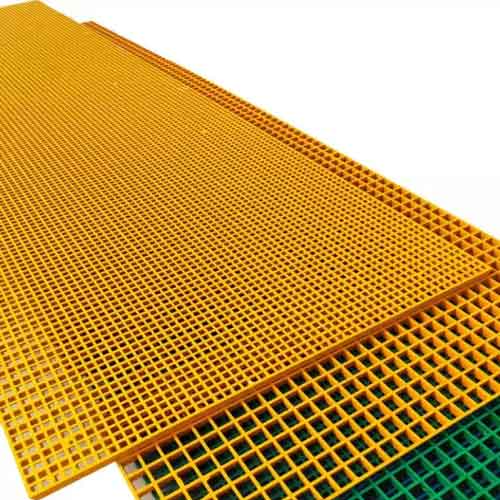
FRP is chemically inert. It does not rust, rot, or corrode. It is the superior choice for aggressive chemical environments (acid baths, electroplating facilities), though it has a lower load-bearing capacity than metals and can be slippery when wet.
-
2026-03-13When engineers design access platforms around cylindrical structures—such as silos, reactors, or storage tanks—the circular platform grating becomes an indispensable solution for safe, ergonomic, and code-compliant walkways. Unlike flat panels that leave awkward gaps, custom-fabricated c
-
2026-03-12Cast iron grating has served as the foundation of drainage systems for centuries, providing the robust, reliable surface drainage that handles pedestrian and vehicular traffic in urban environments worldwide. These cast metal components feature perforated or slotted patterns that allow wat
-
2026-03-11Industrial HVAC systems require stable and safe maintenance access platforms to support personnel and equipment. Chiller platform grating serves as the critical flooring surface for these elevated structures, providing a non-slip and durable working environment. Chillers are typically heav